

XIV. Long-Duration Effects
XIV. Long-Duration Effects
Attrition as Policy
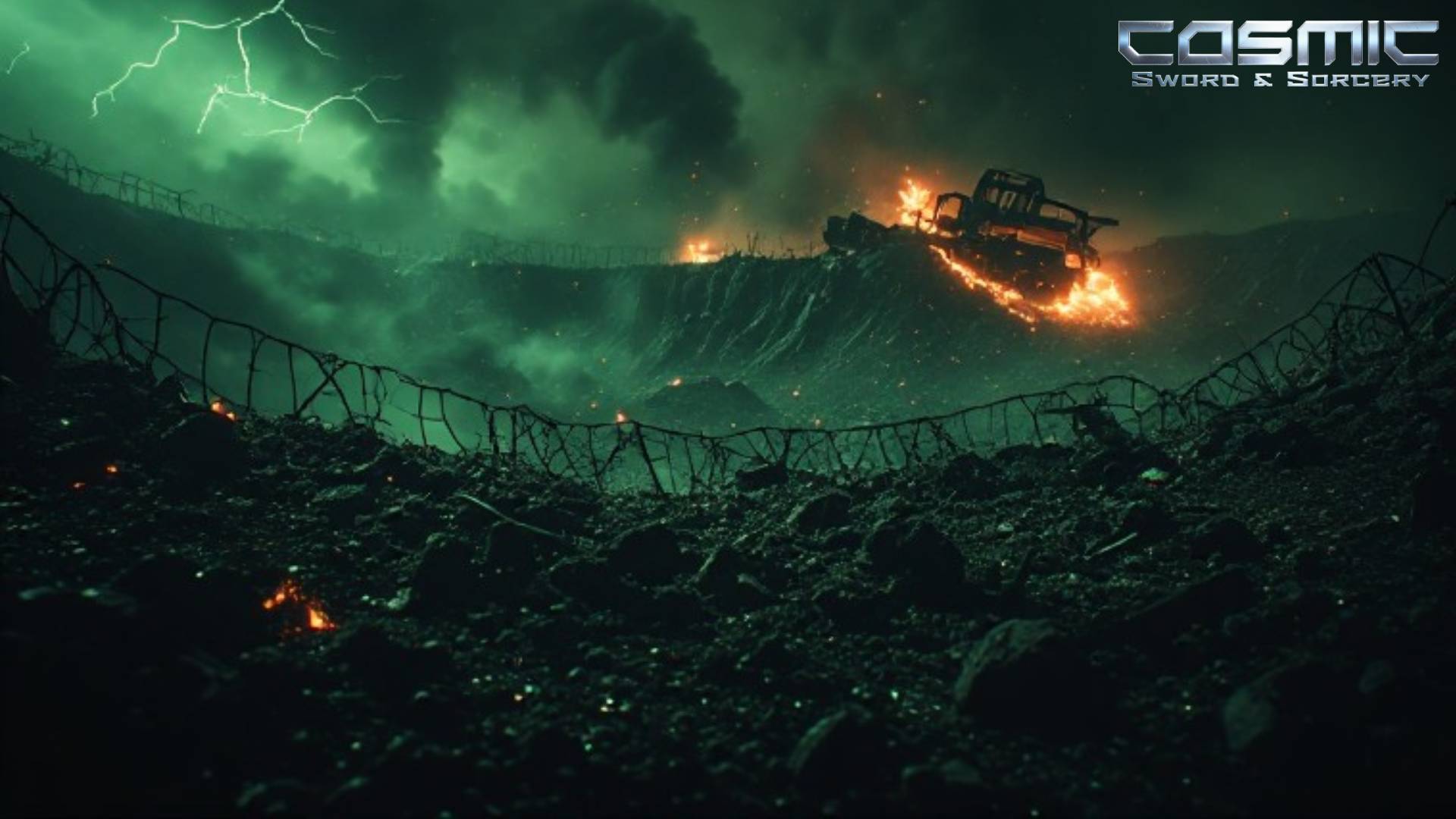
The wars of Yalar are not measured in victories, but in failure amortized across time—proof that in some corners of empire, the only thing more persistent than ambition is the world’s refusal to be subdued.
Yet this condition is not mere accident, nor simply the byproduct of hostile terrain and competing powers. Over centuries, attrition itself has matured from outcome into method. Yalar functions as a pressure regulator within the Ran system, siphoning off excess ambition, unstable factions, surplus penal personnel, and ideological fervor that might otherwise destabilize core territories. The war persists not because it cannot be ended, but because its continuation performs a stabilizing function elsewhere. Losses on Yalar translate into equilibrium beyond it. Command structures rotate officers through its theater not for glory but for calibration; administrators refine throughput models against its casualty curves; logisticians test the tolerances of extended supply chains under chronic disruption. In this sense, Yalar’s stalemate is productive. It produces data, discipline, and deterrence.
The psychological effects are equally systemic. Generations raised under the shadow of Yalar internalize its lesson: that some fronts do not close, that some expenditures are perpetual, that certain theaters exist outside the expectation of resolution. The myth of decisive victory erodes when confronted with a world that cannot be transformed, only endured. This erosion reshapes doctrine across the empire. Strategic language shifts subtly from conquest to management, from triumph to containment. Yalar becomes a case study cited in procurement debates and war college analyses—not as failure to avoid, but as condition to understand. Attrition, once viewed as cost, is reframed as instrument.
Thus the long-duration effect of Yalar is not the exhaustion of a single planet, but the normalization of endless conflict as administrative background. When a war lasts four millennia, it ceases to shock; it becomes infrastructure. Budgets account for it. Recruitment cycles anticipate it. Political rhetoric references it as inevitability. The stalemate hardens into policy not through proclamation, but through habituation. Yalar teaches the empire how to live with a wound and call it utility. In doing so, it reveals the most disquieting truth of all: that an unending war, properly compartmentalized, can be more sustainable than peace.